
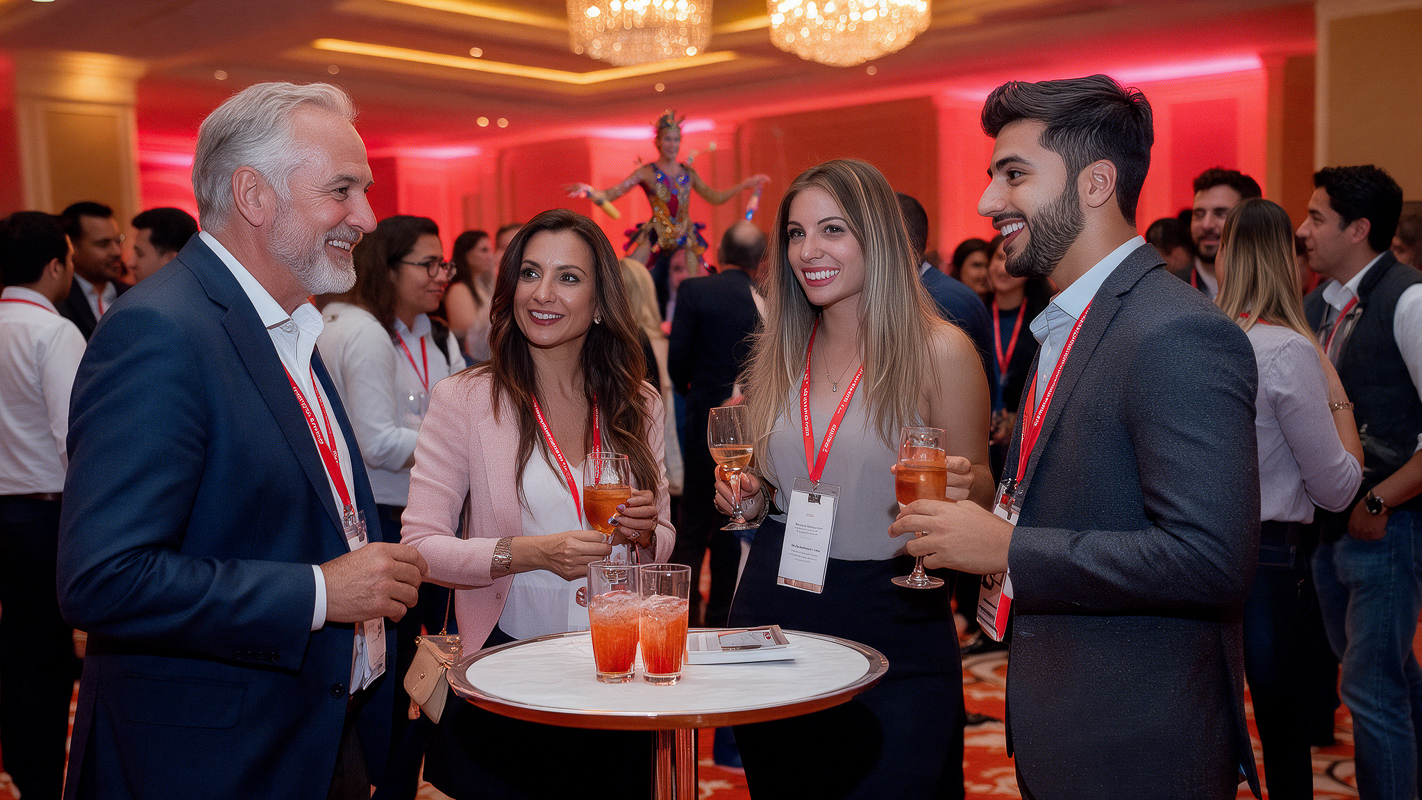
Fresh Entertainment Ideas for Networking Events
Networking becomes easier when the room gives people something natural to notice, discuss and experience together.
The traditional networking formula is familiar: cocktails, background music, a few high-top tables and the hope that conversation takes care of itself. Sometimes it does. Just as often, guests remain with the people they already know, the room becomes noisy and the event loses momentum.
Entertainment can change that dynamic. The right act creates shared moments, gives strangers an easy opening line and helps shape the rhythm of the gathering. It should never make conversation impossible or force guests to stop networking for long periods. Its role is to make connection feel more natural.
Start with the purpose of the event
A client reception, trade-show mixer and employee gathering may all be described as networking events, but they need different energy. A client event may call for polished hospitality and memorable personal interactions. A trade-show reception may need enough movement and spectacle to compete with a busy exhibit floor. An internal gathering may benefit from humour and participation that help colleagues see one another differently.
Before selecting entertainment, planners should define what they want guests to do. Should they meet new contacts, spend more time in a particular area, celebrate a shared achievement or simply relax after a day of sessions? Once the desired behaviour is clear, the entertainment can be designed to support it.
Use roaming entertainment as a conversation starter
Roaming performers are among the most useful choices for networking events because they bring the experience directly to small groups. A close-up magician, mentalist, caricature artist or interactive character can enter a conversation, create a brief shared experience and move on before the moment becomes intrusive.
The performer must be socially skilled as well as talented. They need to read the room, approach guests gracefully and know when a group prefers to continue its own conversation. When this is done well, the entertainment feels spontaneous and personal.
Combine a DJ with live musicians
A DJ provides flexibility, but live musicians add presence. A saxophonist, percussionist, violinist or vocalist can perform alongside the DJ during key periods, then step back when the room needs more space for conversation. This format works particularly well for opening receptions, product launches and late-night conference events.
Volume control is critical. The goal during the networking portion is energy without strain. Guests should not have to lean across a table and shout. The music can build later in the evening if the event shifts from conversation to dancing.
Create short moments of spectacle
Not every networking event needs continuous entertainment. A carefully timed performance can reset the room and keep the evening from feeling flat. An aerial reveal, dance feature, vocal number, fashion presentation or visual act can gather attention for a few minutes and then release guests back into conversation.
These moments work best when they have a purpose. A performance might welcome guests, reveal a product, introduce a sponsor or mark the transition from reception to dinner. The timing should be coordinated with food service, speeches and room movement so the impact is not lost.
Make creativity part of the experience
Live art gives guests something to watch develop over time. A painter, digital illustrator, silhouette artist or collaborative mural can reflect the event theme while encouraging repeat visits throughout the evening. The finished artwork may also become a keepsake for the organization.
For a more participatory approach, guests can contribute a word, image or idea to the work. Participation should be simple and optional. A networking event succeeds when people can move easily between conversation, food and entertainment without waiting in a long line or receiving complicated instructions.
Use technology with a human touch
Interactive technology can be effective at launches, conventions and future-focused corporate events. Digital photo experiences, reactive projections, augmented-reality moments and AI-assisted activations can invite guests to create and share content.
Technology is most engaging when a host or performer gives it personality. An entertaining guide can draw people in, explain the experience quickly and connect one group with the next. Without that human element, even an impressive installation can become something guests admire from a distance and then walk past.
Add discovery throughout the room
Guests are more likely to circulate when different parts of the venue offer different rewards. A tasting station, small acoustic performance, interactive artist or unexpected character can give each zone a reason to visit. This approach is particularly useful in large venues where one central attraction might leave the edges of the room feeling empty.
The experiences should be spaced far enough apart to avoid sound conflicts and congestion. Clear pathways, lighting and subtle visual cues can guide movement without making the evening feel overly programmed.
Give guests an easy way to participate
Participation can be valuable, but networking guests rarely want to be dragged onto a stage. Low-pressure choices work better. A brief group rhythm experience, playful game, song request, prediction or collaborative challenge can create connection while allowing guests to join at their own comfort level.
The host and performers should protect the dignity of the audience. Good interactive entertainment makes volunteers look clever and confident. It never depends on embarrassing someone for a laugh.
Plan the entertainment around the room
Even a strong act can fail if the space works against it. Planners should consider entrances, bars, food stations, registration areas and the natural places where guests gather. A roaming performer needs room to move. A live artist needs good lighting. A feature act needs sightlines and a clear cue that tells guests when to pay attention.
The event schedule matters too. Entertainment at the very start may help early arrivals feel comfortable, while a feature midway through the reception can lift the energy. A final musical build can encourage guests to stay longer or guide them naturally toward the next part of the program.
Design an event people can enter easily
The best networking entertainment does not compete with conversation. It gives conversation somewhere to begin. Guests might compare a magician’s impossible prediction, comment on a painting in progress or meet while waiting for a short interactive experience. Those small moments make the room feel less formal and help people move beyond familiar circles.
ESP Entertainment can help planners choose acts that match the audience, venue and desired energy. With the right balance of performance and social space, a networking event can feel lively, comfortable and genuinely useful rather than like another hour of exchanging business cards.
ESP Entertainment�
