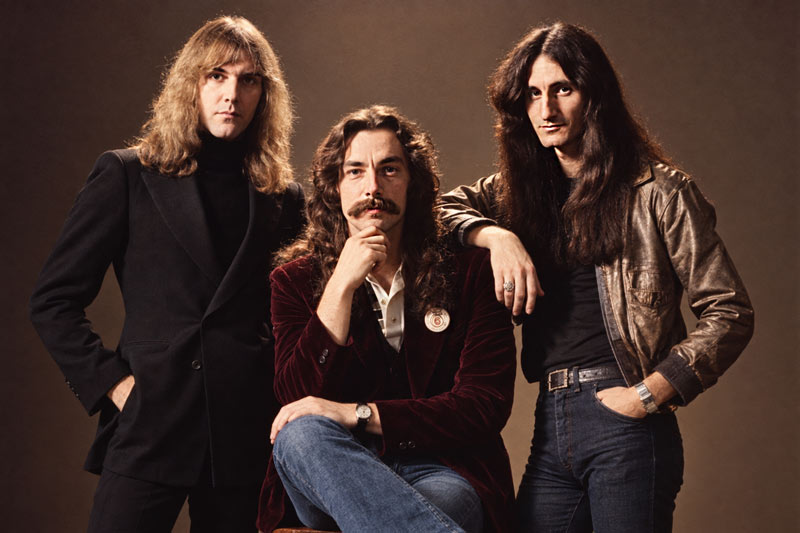
Backstage History: Rush in 1976
Long before Rush became one of the most celebrated rock bands in Canadian history, they were travelling from city to city, building their reputation one concert at a time. ESP Entertainment founder Elwood Saracuse had a front-row seat to those early years.
Before launching ESP Entertainment, Elwood worked as one of Rush�s booking agents at Music Shoppe International, Canada�s largest rock booking agency during the 1970s. His territory included universities, colleges and other venues across Ontario, where a new generation of Canadian rock fans was discovering the band�s unmistakable sound.
At the same time, Elwood occasionally worked as an independent concert promoter. On February 21, 1976, those two sides of his career came together for a memorable concert featuring Rush and Max Webster at Brantford Collegiate Institute.
Bringing Rush to Brantford
Elwood rented the school�s triple gymnasium from the B.C.I. Student Council for $500 and began organizing the concert. Because he was also one of Rush�s booking agents, promoting the band himself presented a potential conflict of interest. The solution was simple: Elwood�s brother, Jeff Saracuse, signed the contract as the official promoter.
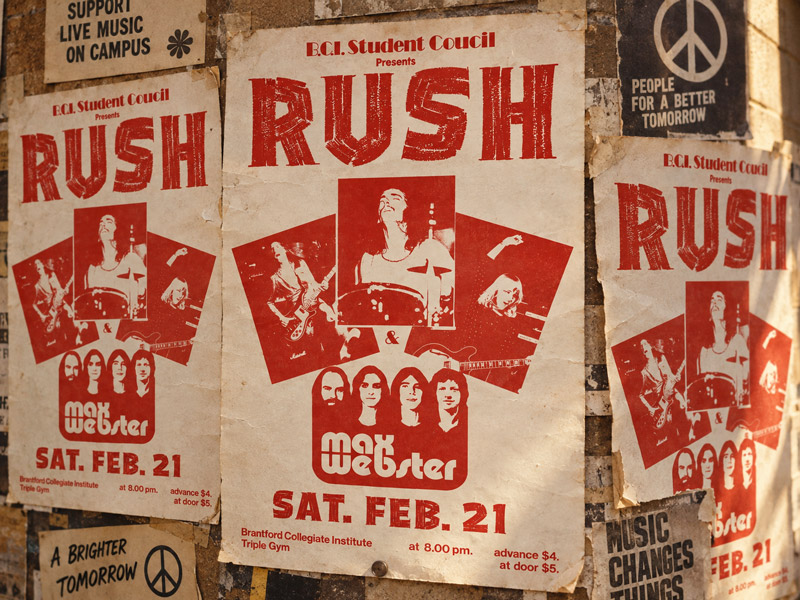
The original poster advertised tickets for just $4 in advance or $5 at the door. It was classic 1970s concert promotion�bold red printing, photographs of both bands and posters displayed around the community to generate excitement.
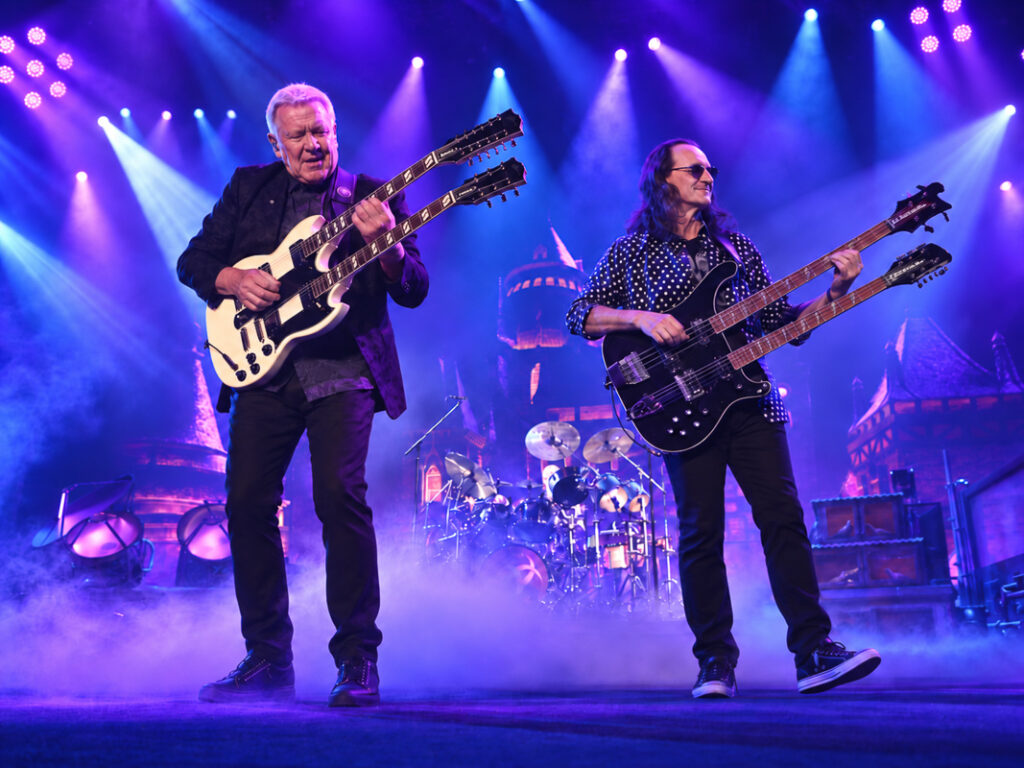
The headliner was Rush, featuring Geddy Lee, Alex Lifeson and Neil Peart. Max Webster, another rising Canadian rock band, opened the show. Looking back now, it is remarkable to see two groups that would become such important parts of Canadian music history sharing the bill inside a high school gymnasium.
The Original Rush Contract
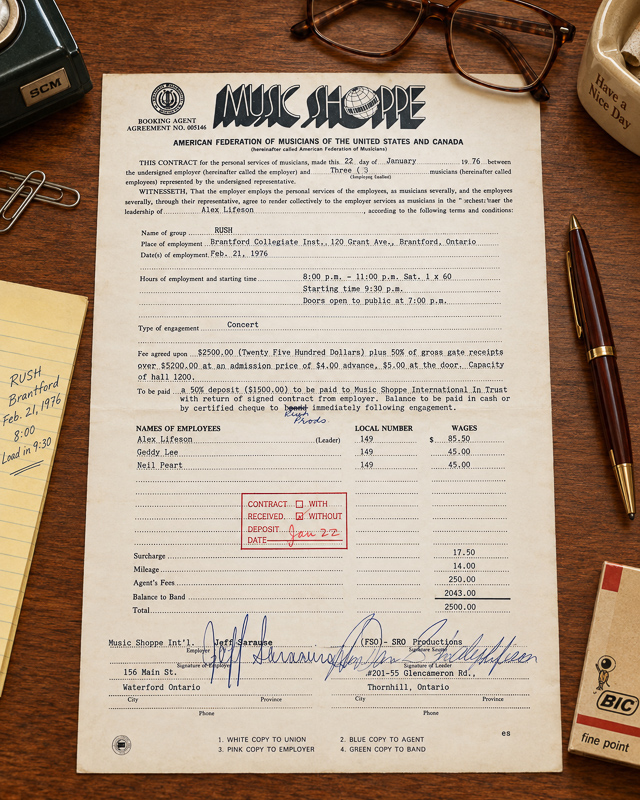
Even more fascinating than the poster is the surviving Music Shoppe booking agreement. Dated January 22, 1976, the contract offers a revealing look at what it took to present a Rush concert nearly 50 years ago.
The agreement called for Rush to receive a guaranteed fee of $2,500, plus 60 percent of gross ticket sales exceeding $5,200. The gym had a listed capacity of 1,200 people, with doors opening at 7:00 p.m. Rush was scheduled to take the stage at 9:30 p.m. and perform one 80-minute set.
The contract also listed the three members of the band individually: Alex Lifeson, Geddy Lee and Neil Peart. At the bottom are the signatures that made the evening official, along with the agency fees, mileage charges and payment instructions that kept the business side of rock and roll moving.
Today, audiences often hear stories about elaborate artist riders filled with detailed technical requirements, hospitality requests, transportation arrangements and dressing-room specifications. In 1976, the surviving paperwork for this show was refreshingly straightforward. It established the performance time, compensation, ticket prices, venue capacity and payment terms�the essential details needed to get the band onstage.
Documents like this are more than old contracts. They capture a period when a concert could be built through phone calls, handwritten agreements, printed posters and a great deal of personal hustle. There were no online ticketing platforms, social media campaigns or digital production documents. Everything depended on relationships, local promotion and making sure every detail came together on show day.
From a School Gym to Rock History
In 1976, Rush was entering a defining period in its career. The band was pushing beyond conventional rock songwriting and developing the ambitious sound that would make it internationally famous. That same year brought the release of 2112, the album that became a major turning point for Rush and helped establish the group�s creative independence.
At the time of the Brantford concert, however, nobody was looking at the poster or contract as a future collector�s item. It was simply the paperwork behind another Saturday-night rock show.
Decades later, both pieces have become remarkable snapshots of Canadian music history�and of Elwood�s early career in the entertainment business.
The Poster Returns to the Tour
The story recently came full circle when the original Brantford concert poster reappeared as part of the decor in the Xanadu Lounge, the VIP experience created for Rush�s current tour.
Among the displays celebrating the band�s extraordinary history, fans can now see the poster from that February night in Brantford�a reminder of the smaller venues, early promoters and local audiences that helped Rush along the road to becoming rock legends.
For Elwood and ESP Entertainment, seeing it there is especially meaningful. What began as a concert in a rented high school gymnasium has become part of the official visual history of one of Canada�s greatest bands.
The ticket prices, venues and scale of the productions may have changed dramatically, but the excitement of bringing artists and audiences together remains exactly the same.
Rush Today!